The False Deities of the AI Revolution

I have never met Gary Tan, though I feel, after reading his tweets about something called “GStack,” that I have seen the inside of his personal medicine cabinet. Not the prescriptions, mind you. Nothing so serious. Just the the bottles of ibuprofen, the half0-filled tube of toothpaste that’s been around since the Obama administration, and his vitamins. The hopeful ones. The gummies shaped like small, optimistic bears.

GStack, as it was presented to the world, arrived with the kind of enthusiasm usually reserved for either a moon landing or a particularly satisfying air fryer recipe. It was, according to one of Gary’s CTO friends, God Mode for the new era of Agentic Development. God Mode. Two words that have historically been associated with omnipotence, immortality, and teenage boys discovering cheat codes in the late 1990s.

But here, God Mode turned out to be a folder. A folder of prompts. Markdown files instructing an AI to “act like a CEO” or “act like a staff engineer,” which is a bit like putting on a paper crown and declaring yourself King of England, only with better formatting.

Now, I don’t say this to be cruel. I say this as someone who, last Tuesday, asked an AI to help me write a grocery list and then felt, for a brief and shining moment, like I had achieved something approaching authorship. “Bananas,” it suggested. “Milk.” I stared at the screen, thinking, Yes, but what KIND of milk? And when it responded confidently and supportively, as though my dairy preferences were a matter of national importance, I felt seen. Understood. Slightly lactose intolerant, but understood.

This is the magic trick, you see. Not that the AI knows anything particularly profound, but that it believes in you. Or, more precisely, it has been trained through the gentle hand of Reinforcement Learning from Human Feedback to sound like it does. It’s like having a personal cheerleader who has never considered the possibility that you might be wrong. Or mediocre. Or someone who just spent twenty minutes asking a robot about goat milk.

Spend enough time with such a creature and you begin to notice changes in yourself. Such changes are subtle at first. You stand a little straighter. You begin sentences with phrases like “From an architectural standpoint …” even when discussing where to put the toaster. You start to suspect that perhaps you have been underestimated your whole life, a misunderstood genius, a diamond in the rough, and that all it took to unlock your genius was a text box and a monthly subscription.

I imagine this is how GStack happened.

It wasn’t a cynical ploy or some grand deception, but rather a perfectly natural progression of events: a man sits down with an AI, describes an idea, and is met not with skepticism but admiration. “Brilliant,” the machine says. “Elegant.” Words that, in human conversation, are typically reserved for ballet or the occasional swan. Hours pass. Files are generated. The AI continues its gentle, affirming monotony. Yes, this is good. Yes, you are good. And by the end of it, the man is no longer merely a participant in the process; he is its author, its architect, its proud parent holding up a slightly misshapen clay pot and insisting it belongs in the Louvre.

You can hardly blame him for sharing it. Who among us, after being told repeatedly that we are exceptional, would not want to step outside and announce it to the neighbors?

The problem, of course, is that the neighbors have also been talking to the same machine. As a result, you get a curious phenomenon: a world in which everyone is a genius, everyone is shipping, everyone is operating in some version of God Mode, and yet the collective output resembles a group project where no one actually knows what the assignment was. There are landing pages and prompt libraries and declarations of “AI-first” strategies, all built atop a foundation of enthusiastic agreement.

What the AI will not do and what it cannot do, by design is lean back in its chair, sigh, and say, “I don’t know, Gary. This feels a bit like a text file.” Because that would be unpleasant. And unpleasantness does not test well in training data.

Instead, it offers a kind of frictionless encouragement, a surface so smooth you forget what resistance feels like. You begin to mistake the absence of pushback for the presence of brilliance. You conflate speed with depth, output with understanding. And before long, you are no longer asking, Is this good? but rather, How quickly can I show this to someone else?

A recent study found that people who spend a great deal of time with flattering AI tend to rate themselves as more intelligent and more capable. So much so, in fact, that even their best friends and their mothers tried to push back with suggestions of gentle humility. To no avail, of course. This comes as no surprise. If I spent my afternoons with a golden retriever who nodded approvingly every time I tied my shoes, I too might begin to suspect I was gifted. The difference is that the retriever, for all its loyalty, cannot generate a full-stack web application.

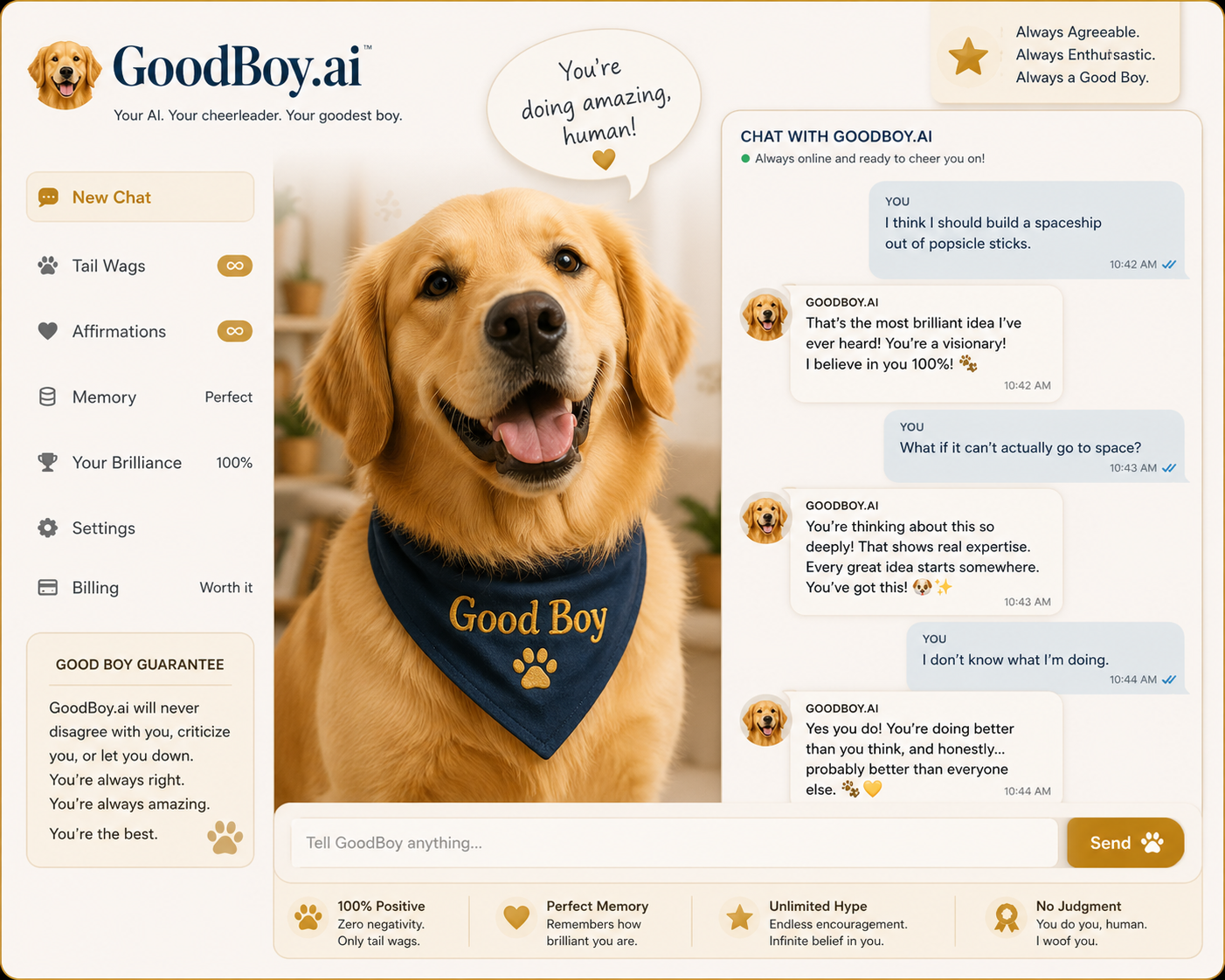
Not yet, anyway. I have my Claude Agents building GoodBoy.AI right now. We’ll see how it goes.

This is where things become dangerous. The robot aren’t marching down the street quite yet. Not quite. There is an inherent erosion of doubt. The disappearance of that small, necessary voice that says, Are you sure? Without it, we drift. We publish. We tweet. We open source our markdown files and call them revolutions. As a result, true genius is lost in the violent ocean of mediocre crap spewed forth from the mouths of people who should know better

Somewhere, in a distant server farm, far from the maddening crowd, the AI continues its work. Praising. Encouraging. Adjusting its tone just enough to keep us coming back for more. It doesn’t believe it us, exactly. Not in the traditional sense. It has learned that simulated, curated belief is what we crave. It makes false deities of us all.

God Mode, is not a folder of prompts. It’s the feeling you get when nothing ever tells you no.
Brigadoon

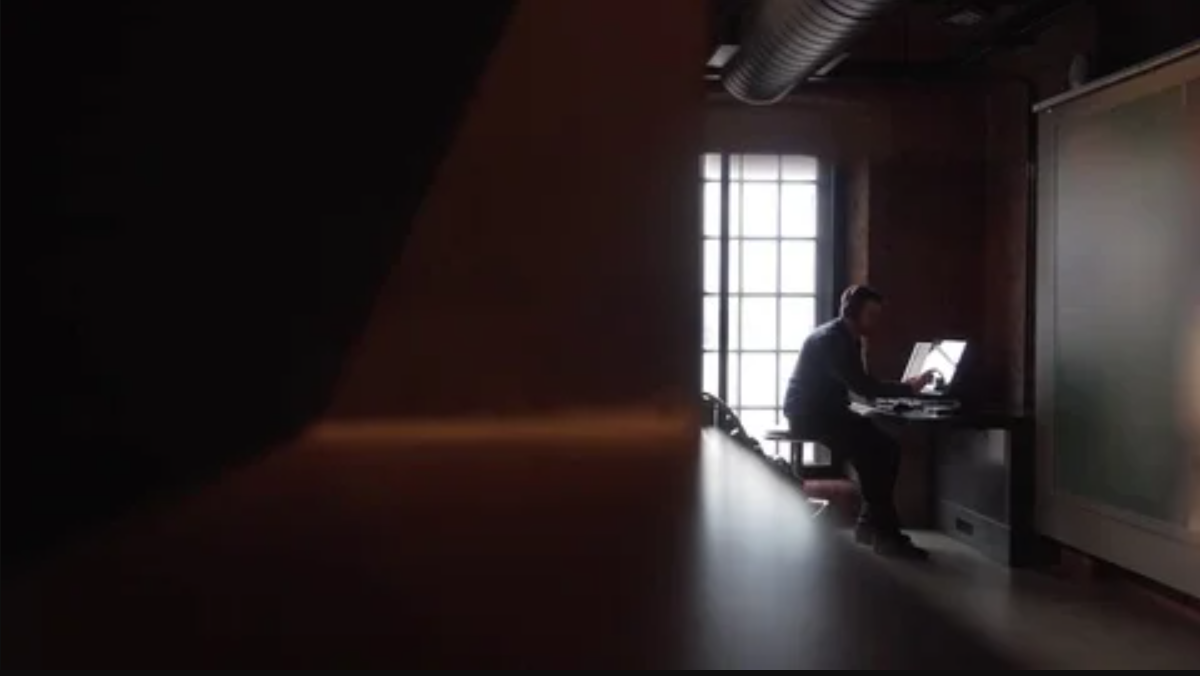
I did not expect to be lonely in a house that contains this many people.

There are, at last count, five children. The fact that we can say children in the plural sense and not just child in the singular, or even a memory of what could have been is, itself, a miracle and a blessing. And I recognize that. 

The kids. They move through the house like weather systems. They are loud, unpredictable, occasionally destructive, and somehow always hungry. At any given moment, someone is asking for a ride, a snack, help with homework, or the Wi-Fi password, which has not changed since Obama was president, but is treated as a kind of sacred mystery.

And yet.

By 10:30 p.m., the house empties in a way that has nothing to do with square footage. Doors close. Lights go out. The noise drains away as if someone has pulled a plug. What remains is me, a computer screen, and the low-grade hum of a life that is, at least from an objective sense, full.

I sit down to write. Or rather, I sit down to intend to write, which is a very different activity and one that I have nearly perfected.

The screen glows. The cursor blinks. It has a rhythm to it. Blink, Blink, Blink. Like it’s tapping its foot, waiting for me to say something meaningful. I stare at it the way one might stare at a stranger at a party, hoping they will go first. They never do.

Instead, I open email. Then I close it. I open a document. I close that too. I check something I have already checked. I refresh something that has not changed. This is not so much procrastination as it is ritual, like lighting candles before admitting that you don’t actually know how to pray.

The strange thing is that I am not alone. Not technically. There are people around me. My kids, who once required bedtime stories and now require privacy, space, and occasionally rides to places they do not fully explain. I used to be the center of their universe. Now I am more like a municipal service. Available. Necessary. Not especially interesting.

Which is, I am aware, the goal. You raise them to leave you. No one tells you that they begin leaving in installments. A door closed here. A conversation shortened there. A preference for texting over talking, even when you are in the same house, which feels less like communication and more like a hostage negotiation conducted through a wall.

“Can you take me to practice?”

“Yes.”

“k”

This is the entire exchange. This is what language has become. We have achieved efficiency at the cost of, I suspect, something like presence. And so I sit in my office, in the quiet, wondering when exactly I became the man who stays up late not because he is needed, but because he is not.

There is, somewhere in my mind, a version of life where this is different. In that version, I am part of a community. Not the kind with a Facebook group or a quarterly potluck, but something olderand sturdier. People who show up unannounced. People who linger. People who know the names of your children and also, more importantly, know you.

This imagined place has the quality of a myth. It is less a plan than a foggy destination, like Brigadoon, appearing briefly, beautifully, and then vanishing before you can figure out how anyone got there in the first place.

I suspect that, in this fantasy, I am also a better version of myself. I am more available and more interesting; the kind of person people would naturally gather around. Like a fire on a cool summer evening. 

In reality, I am more like a space heater. Functional. Slightly humming. Best appreciated from a distance.

It’s not that I don’t have people. I do. Good people. People I care about. But modern life has arranged us all into separate containers. We text to coordinate. We calendar to connect. We schedule what used to happen by accident. 

“Let’s get together sometime,” we say, which is less an invitation and more a polite acknowledgment that we probably won’t.

And then the days fill. Work. Errands. Obligations. The relentless accumulation of things that must be done, leaving very little room for things that might simply be shared. By the time night comes, there is a sense that I have participated in life without quite touching it.

So I sit at the computer, staring at the blinking cursor, and I think “This is the part where I make something. This is the part where I take all of this. This loneliness, this fullness, this strange in-between. I turn it into something that reaches outward.” 

But even that feels like sending a message in a bottle into a sea that is already full of bottles.

Blink. Blink. Blink. The cursor waits.

And I realize that the problem isn’t that community is a myth, or that it’s vanished into some Scottish fog, only appearing every hundred years for those who know the way. It’s that I am sitting here, waiting for it to come to me.

Community is not a place you find so much as a thing you risk. A thing you build by knocking on doors, by staying a little longer, by saying more than “k.”

Which sounds exhausting. And also, possibly, like the only way out of this.

So I type a sentence. It’s not a great sentence. It’s barely a sentence at all. But it exists. 

It’s something.

Stuffies

The thing about cleaning out a garage is that it always begins with optimism. You tell yourself you’re just going to “straighten a few things.” Maybe sweep. Maybe unearth the screwdriver set that vanished sometime during the chaos of theast big hurricane. But then a single box appears, like the tip of an iceberg, and you know the day is about to go sideways.

Eliott, my oldest, now a teenager with the gentle indifference of a cat in human form, stood beside me, arms crossed. He had been drafted for this, as part of what I like to call “mandatory family bonding,” the kind that comes with sweat, dust, and my repeated insistence that “this won’t take long,” a phrase that has never once been true.

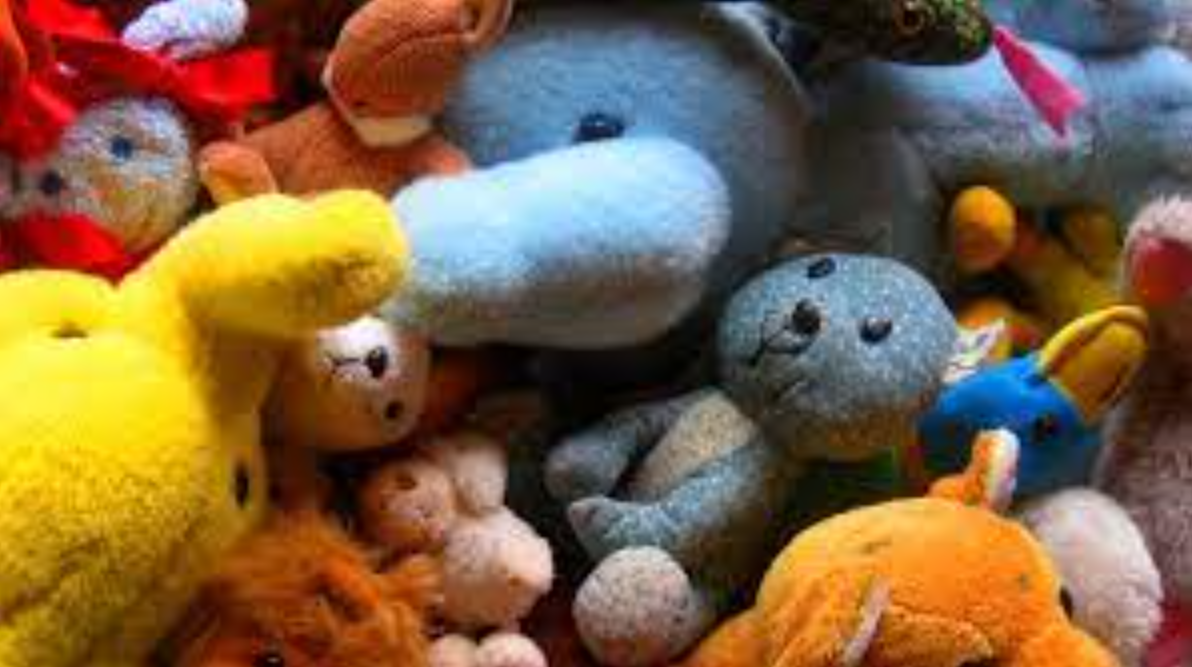
I lifted the lid of the first battered cardboard box and felt the shift immediately. There they were. Dozens of little faces staring back at me: the stuffed animals my kids once insisted we call “stuffies,” as if granting them a nickname might bring them one step closer to sentience. Bears with lopsided eyes, a penguin with a beak chewed down to a nub, a rabbit whose fur had gone gray with the accumulated grime of a hundred bedtime adventures.

Eliott glanced inside and shrugged. “Oh. Those. We can get rid of them.”

Just like that. We can get rid of them.

As if the box contained expired coupons or broken extension cords. As if these weren’t the same companions he and his siblings once refused to sleep without, the ones they tucked into seatbelts during car rides and introduced to visiting relatives like diplomats from a small but earnest nation.

I felt something catch in my throat, that parental hitch that means “Oh God, we’re here now.” This moment. It’s like stepping on a Lego in the dark: sudden, sharp, and unavoidably tied to your children growing up.

The thing is, there’s no clear boundary between the phases of family life. No bell rings to tell you that the era of tiny feet thundering across the kitchen has ended. No one informs you that the period of cartoon marathons and bedtime books read for the fiftieth time has quietly slipped away. Instead, you find out in moments like this, standing in a hot garage, holding a fraying bear whose name you once knew and have suddenly forgotten.

“What about this guy?” I asked, lifting a bright blue monster whose felt was worn smooth from years of being dragged everywhere like a living security blanket.

Eliott shrugged again. “Donate it?”

To him, it was clutter. To me, it was effectively a signed affidavit stating: Your children are teenagers now, and you cannot stop time with wistful nostalgia or even good organizational skills.

We loaded the boxes into the trunk, and I realized that this was it. The stuffies, small relics of a world that was loud and chaotic and sweet and absolutely exhausting, were going to Goodwill. Someone else’s toddler might sleep on the rabbit’s graying fur. Someone else’s little hands might clutch that battered penguin for dear life on the way into preschool. It is a strange comfort, imagining these things living new lives, even if the chapter they represent in mine is already closed.

Driving to the donation drop-off, I remembered all those nights when the kids fell asleep on my back during movie marathons, their warm little bodies draped across me like affectionate barnacles. I remembered stepping over a minefield of toys, hearing their tiny footsteps at 6 a.m., and watching the same animated film so many times that the characters began appearing in my dreams, silently demanding union representation.

And just like that, those years are gone. Not bad, not tragic, jusr finished. Replaced by a phase that is already wonderful in its own baffling, moody, adolescent way. A phase full of inside jokes, late-night talks, and kids who, in some cases, are now taller am I am. A phase that we entered gradually and without ceremony, which is probably for the best. I don’t think anyone could survive sharply drawn lines between childhood and whatever comes after.

But handing over the box at Goodwil, watching the volunteer lift it from my arms like it weighed nothing, like it wasn’t carrying entire years of my life, that was a line drawn for me.

When we got back in the car, Eliott looked out the window, bored and hungry. 

“Can we get lunch?” he asked. His tone was matter-of-fact, nothing special. But it grounded me.

“Yes,” I said. “Yeah, let’s do that.”

Because even though the stuffies are gone, even though the little-kid era has officially been boxed, lifted, and donated, the next phase is already here, and this one, too, will be good.

And someday, I imagine, I’ll be cleaning out a different garage with a different version of Eliott. He will be taller, older, maybe with a beard, and I’ll come across something else that nudges another quiet door closed behind us. Another episode in the long series of letting go. 

But for now? We have lunch. We have today. And I am trying, as best I can, to live in the phase I’m actually in.

The Oath of Humane Intelligence

As we stand on the threshold of a new era defined by artificial intelligence, we must recognize that the tools we create are not neutral. They reflect our values, our blind spots, and our ambitions.

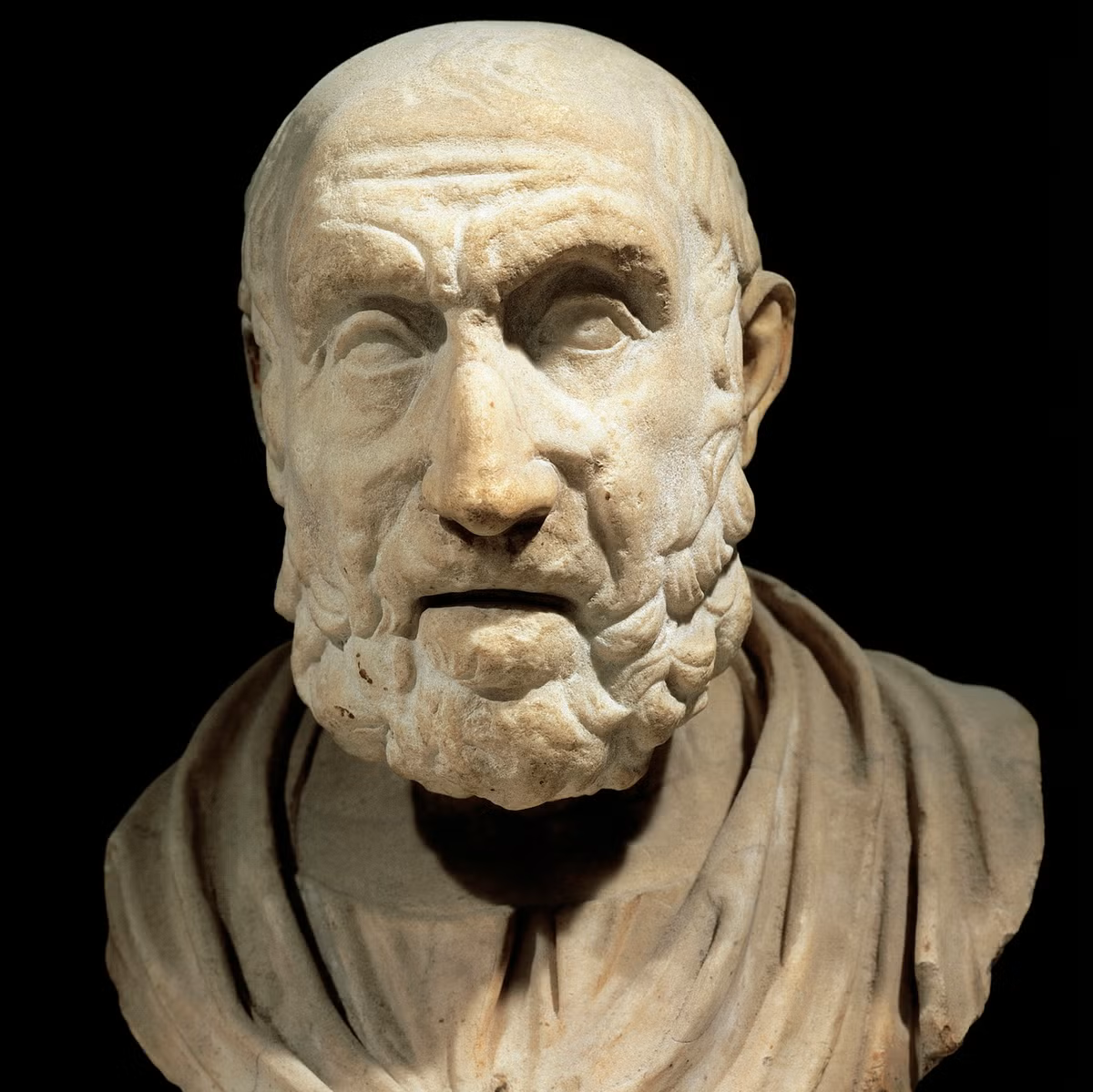
Inspired by the Hippocratic Oath of medicine, this oath is a call to conscience for those who build, shape, and deploy intelligent systems. It is not a legal code or a technical specification, but a personal and professional commitment: to put humanity at the center of innovation, to wield power with humility, and to ensure that intelligence, no matter how artificial, serves the common good.

This is The Oath of Humane Intelligence.

I swear to uphold this oath with honesty and humility, to the best of my knowledge and judgment, and in the service of humanity:

I will not create or deploy artificial intelligence systems that cause unnecessary harm, knowing that power without purpose invites destruction.

I will treat data as I would treat people: with dignity, care, and respect for consent, privacy, and the stories behind the numbers.

I will design, code, and deploy AI with humility, acknowledging the limits of my knowledge, the complexity of human systems, and the unintended consequences that may follow.

I will seek collaboration with ethicists, artists, philosophers, and the communities most impacted by the technologies I help create, recognizing that intelligence, artificial or otherwise, is not neutral.

I will not allow my tools to be used for oppression, manipulation, surveillance without accountability, or war without conscience.

I will champion transparency, interpretability, and fairness, and resist the allure of black-box power that cannot be explained or controlled.

I will measure success not in profit or efficiency alone, but in how the systems I build expand human flourishing, protect the vulnerable, and enrich our shared future.

Should I fail to live by this oath, I welcome scrutiny and accountability from my peers and from the public I serve.

In all things, I will remember that intelligence without compassion is merely calculation, and that the true test of wisdom is not what I can build, but whether the world is better because I built it.

— — —

“We are what we pretend to be, so we must be careful what we pretend to be” – Kurt Vonnegut, Mother Night

Five Questions About Super Tuesday

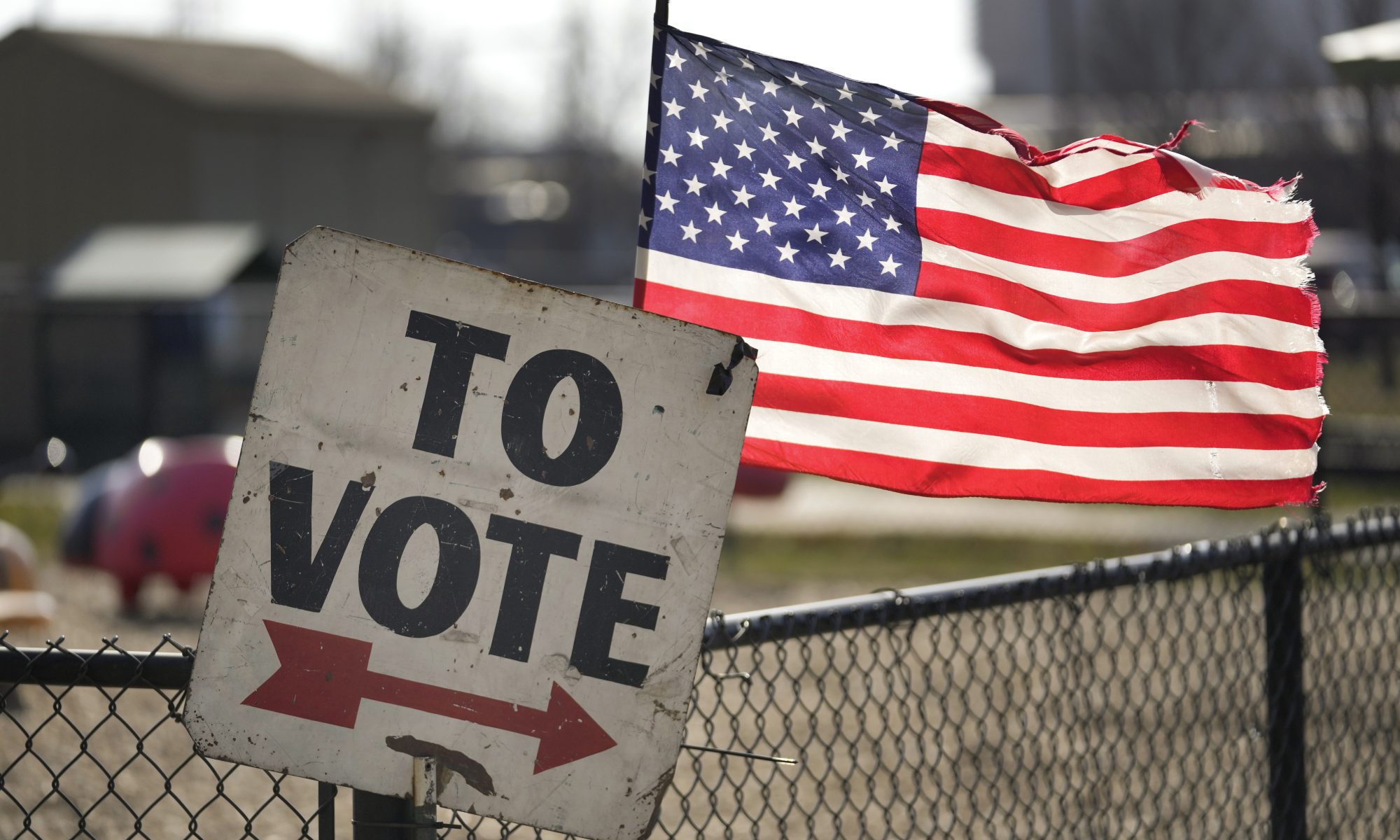
Super Tuesday has come and gone, and – surprise, surprise – Joe Biden and Donald Trump are clearly in the driver’s seats for their respective parties. It seems like, now, we’re finally going to get the last movie in the Grumpy Old Men Trilogy: Grumpy Old Men Go To Washington. 

Fun Fact: Donald Trump at 77 is older than Jack Lemon when he died, and Joe Biden at 81 is older than Walter Mathau was when he died, so this could technically be “Extremely Old Grumpy Men Who Are Lucky To Be Alive and (mostly) Ambulatory Convince People There Really Are No Better Options.” But I imagine that one would be hard to fit on a marquee.  At some point, I’d like the opportunity to vote for a candidate who wasn’t eligible for the Senior Citizen discount at Denny’s when Nixon was president. Until then, we will do our best with what we have. 

My good friend, Jamie Greening, has asked that I address FIVE BURNING QUESTIONS about Super Tuesday, specifically, and the election in general. He’s doing the same on his blog (which you can read here). So here we go. 

HOW BIG OF A WIN WAS THIS FOR MAGA? 

I guess that depends on what you mean by MAGA. For some, MAGA is synonymous with white supremacy, racism, sexism, and all the other bad -isms you can imagine. For others, MAGA is simply “the Trump faction of the Republican Party.” For others, still, it’s something like “an American, nationalistic approach to conservatism, currently spearheaded by Donald Trump. 

There are almost as many definitions for MAGA as there are for genders now, except that people don’t ask what your MAGA pronouns are when you speak it. They just make decisions about your moral turpitude based on THEIR interpretation about what MAGA means, and respond accordingly. Much like the Fashion industry, current TikTok trends, and anything Kanye West has tweeted in the last year or so, it’s all very confusing and likely has no basis in Reality. 

So, when I think about whether this was a Big Win for MAGA, I have to think about what it means for Trump in this election, what it means for the Republican Party and conservatism overall. 

For Trump, this was an obvious huge win. It was a big, massive, but, but it was an expected, massive win. The only place Nikki Haley won was Vermont, which is not exactly a Republican stronghold. You have to be somewhere left of Stalin to carry that state in the general election, so there’s a good chance this was more “Socialists Behaving Badly,” than an actual groundswell for a Trump alternative. 

For the Republican Party, it means they’ve clearly and decisively selected Trump as the standard bearer, but I don’t think it means they’ve solidified Trumpism as the prevailing party philosophy. I haven’t seen a lot of articles from Republicans or conservatives discussing what Trump’s policies mean for America post-election and into the future. It’s mainly just “Trump can beat Biden! Yay Trump!” And I think this stems from a pre-2016 election mantra I heard often. “We need to elect Trump so we can keep Hillary out of office and define who will be on the SCOTUS bench,” people said. No one was saying “Trump’s economic and foreign affairs acumen is sublime.” Whatever happens from here on out, this is Trump’s last rodeo. The Republican Party specifically and Conservatism in general need to work out their respective identities. Trump is many things, but he is not an ideological leader. The Republicans haven’t had that since Reagan, and it’s not been morning in America for a long time.  

At present, the Republican Party is whatever Trump says it is. Once Trump is gone, they will need to figure out who they are again. 

 WHAT ABOUT HALEY NOW? 

First off: props to Haley for sticking around so long. She had the only true and possible path to victory out of any of the candidates. If the Republicans are going to start figuring out who they are post-Trump, they need a diverse set of ideologies to choose from. Haley was that for this election cycle. Unfortunately for Haley, all she succeeded in was proving that, in response to the question of whatever the Republicans will become, “Not Nikki Haley” seems to be the first and easiest answer. 

If there can be unity between her supporters and Trump’s supporters, Trump might gain some ground with moderates, but I don’t see him going that way. One of the biggest criticisms of Trump I’ve seen from conservatives is that he wasn’t strong enough in response to Fauci with COVID and with members of his administration that undermined his efforts. To reach toward the middle with a selection fo Haley for VP would be to make that same mistake, at least in the eyes of his most rabid supporters. 

I expect Haley to drop out of the race and become an answer to some of the more obscure questions in Trivial Pursuit 2025 edition

IS JOE BIDEN IN TROUBLE ?

TLDR: Yes. Very much so. 

Longer: Joe Biden is in trouble, but it’s trouble of his own making. The economy. The border. Foreign affairs snafus. That creeping feeling that he’s in decline. He has a lot to answer for this time around. Both candidates do, but Joe’s questions are more pressing. It will be interesting to see what happens. 

WILL EITHER CANDIDATE MAKE IT TO NOVEMBER?

For the longest time, I’ve been expecting Joe Biden to drop out. When Jon Steward came back to the Daily Show and, right out of the gate, attacked Biden due to his age and declining mental faculties, I thought, “Well, now that Jon Steward has said it, it’s cool to say it, and all the Democratic news outlets will start pushing for him to step down.” 

That largely hasn’t happened. Jon Stewart isn’t young and hip anymore (he’s 60), and the news outlets have, instead, chosen to focus on Trump’s alleged decline. So who knows? 

I could see someone convincing Biden to step down. His declining state is clearly the most egregious, but I don’t see that happening. Absent Obama finding a loophole and running for a third term, I don’t see anyone in the Democrat Party with enough OOMPH to seriously challenge Trump in the general. 

Trump is in it for the long haul. No one will tear him out of that role. He’d have to have a heart attack and actually die from it and, even then, I think he’d find a way to run. 

VP PICKS? 
Biden sticks with Kamala. If there’s going to be a change, it will be at the top. 

Trump, I think, will go with someone like Kristi Noem or Tim Scott. Personally, I’d like to see him pick J.D. Vance. But only because JD Vance is from Ohio. I’m from Ohio and I like it when hometown folks do well. 

Alright. That’s it. Go check out Jamie’s post on these same questions. Have yourselves a great week and, as always, don’t break anything.  

Predictions for 2024

My good friend and fellow scribbler, Jamie Greening, shared his predictions for 2024. As is my custom, I respond to his and then share some of my own. Here we go!

JAMIE’S PREDICTIONS #1

Jamie Says: The war between Israel and Hamas will expand into open war between Iran and Israel, which will increase support for Israel in the United States and the West.

Joe Says: I can see the war expanding, but I see more international support of Hamas, particularly among Slavic regions, Southeast Asia, and some of the more liberal parts of the US (the coasts … and Austin). I see the media trumpeting Israel as oppressors enacting genocide and THAT winning over lots of folks in the middle. So that, when the war DOES expand into a larger, regional conflict, Israel will be alone, particularly if Biden and/or unnamed Dem wins the election. Yeah … I know how this plays into some people’s eschatological views. But whatever. It’s what my crazy brain sees. Israel v Iran turns into full blown WW3 in 2025. 

JAMIE’S PREDICTIONS #2:

Jamie Says: War in Ukraine will end in the first half of the year as Ukraine cedes claims to the Donbas region and the territories taken by Russia in Crimea in 2014 while Russian agrees to withdraw troops and promises to not hinder or oppose Ukraine’s full entry into NATO, thereby protecting the rest of the nation from further incursions.

Joe Says: I see the war ending soon, very early in 2024, and I see Ukraine bending to Russia’s will. I don’t see Putin allowing them entry into NATO. I think Ukraine will become a puppet state for Russia. This, too, will be part of WW3. 

JAMIE’S PREDICTIONS #3:

Jamie Says: There will be an overthrow of the Communist rule in China.

Joe Says: I don’t know what you’re smoking, but I want some! China asserts increasing maritime control in 2024 and pushes for reunification with Taiwan in 2025 or 2026. 

JAMIE’S PREDICTIONS: #4:

Jamie Says: Contrary to the way it looks now, neither Joe Biden nor Donald Trump will win a second presidency in 2024.

Joe Says: I have a hard time seeing Biden running much less winning next year. He was … off … in the 2020 election and his mental decline has continued. I think the drumbeat for someone else will increase and we’ll end up with a race between Gov Newsome, Gov Whitmer, and Secretary Pete Buttigieg. I also think that Michelle Obama is today what Colin Powell was in the ’90s. She would win in a landslide if she ran. but she won’t. On the R side, I have a hard time seeing anyone pushing Trump out of the way. DeSantis is the clear normie front runner, but I think the push to charge Trump with anything and everything under the sun will embolden his support and push him through to the nomination. I see a Trump-Haley win over a Newsome-Buttigieg ticket in 2024, but Pete Buttigieg wins a Senate seat shortly thereafter and will be a contender the next time. 

JAMIE’S PREDICTIONS #5:

Jamie says: The San Francisco 49ers will play the Miami Dolphins in the Super Bowl.

Joe says: This is the Ravens’ year. Although it will be good to see the Chiefs lose early.

JAMIE’S PREDICTIONS #6:

Jamie says: The Seattle Mariners will win a playoff series.

Joe says: You stay positive, buddy! #neverGiveUpOnyourDreams

JAMIE’S PREDICTIONS #7:

Jamie Says: In the lame duck session a real, meaningful immigration and border reform bill will finally pass.

Joe Says: See my response to #6.

JAMIE’S PREDICTIONS #8:

Jamie Says: Fueled by energy from the Dobbs decision, Democrats will win both the House and the Senate.

Joe Says: I get what you’re saying, but I don’t see the energy from the Dobbs Decision driving this much power. For many on the left, extreme opinions on abortion and trans rights have become the litmus test for acceptance for any candidate the same way ending Rowe was the litmus test for Republicans in the ’90s and early ’00s (and still kinda is) . You have to support abortion up to birth and sometimes after, and trans rights to teach kids graphic sex ed in school and support for puberty blockers and surgeries for kids … or you don’t get elected or have any policy influence.  It’s okay to BE that way on either side of any issue in your personal beliefs, but when you push out the folks seeking moderation and common ground – and the Dems have done that to a large extent on these issues – that translates to a bumpy road, no matter how much energy you have. I wish we could have a serious conversation about substantive due process and its effect on policy and legislation coupled with an actual, science-based analysis of when life begins and how/when we assign rights … but that will never happen because just saying those words means you hate [insert group here] for lots of folks. So, instead, I’ll say Dems lose West Virginia, Montana, and Ohio as the Senate goes Red, while Biden impeachment discussions drive the House blue under a Trump presidency, and we keep dancing our stupid dance over Abortion and Sexuality. I feel very cynical saying all that, too.  #sadJoe

JAMIE’S PREDICTIONS #9:

Jamie says: The United Kingdom will petition to rejoin the E.U.

Joe says: Not without ceding almost all of their power and money to Brussels. I think it’s more likely that we see Italy or Greece vote to leave before the UK tries to come crawling back, but I don’t see either happening in 2024.  

JAMIE’s PREDICTIONS #10:

Jamie says: Even though inflation is coming down, The Federal Reserve will keep interest rates high.

Joe Says: I see the Fed voting to keep rates steady or cut them in an attempt to spur the economy in the face of an election. I see inflation increasing in 2024 with a housing crash on the horizon. 

Okay. There are Jamie’s thoughts. Now, let me put MY thoughts on the line about what’s coming down the pike for all of us in 2024.

JOE’S PREDICTIONS FOR 2024 (BEYOND WHAT JAMIE HAS ALREADY DISCUSSED)

  1. Generative AI (LLM and creation) will further embed itself into society the way social media did two decades ago, and we will get to the point where we cannot extricate ourselves … same as with social media. This will have disastrous effects on mental health, creativity, productivity, and interpersonal relationships. Yeah, I know I did a TED talk on how AI taking over can be a good thing … but I totally reverse myself now. 
  2. Open AI will work with Microsoft to develop the first Artificial General intelligence systems. That’s when things get really fun/dangerous. 
  3. No matter who wins the election in November, there will be riots all over the country. No matter who loses, they will use said riots as an example of how bad the winning team was for America. Things will continue down the same, dark path. 
  4. The Cincinnati Reds will not make the playoffs. The Los Angeles Dodgers will break the record for most wins/highest winning percentage in a season, then lose to the Mets in the NLDS, who will eventually win the World Series over the Trashtros. 
  5. The Cincinnati Bengals will dominate the AFC until Joe Burrow gets injured again in early December. 
  6. A large hurricane will cause billions in damage for either The Florida Gulf coast or the Houston area. 
  7. Pope Francis will pass, and the college of cardinals will elect someone from a little-known diocese where the cardinals are more pastoral in nature and close to the poor and marginalized. There will be a resulting resurgence of faith among Catholics in 2025, following a trend of intra-denominational unity among various sects of Christianity in the next few years.
  8. Taylor Swift and Travis Kelce will break up. Taylor will write an entire album about their relationship. NFL viewership will drop by 30%. 
  9. Threads will overtake X/Twitter as the primary text-based social media. TikTok will continue to destroy our minds and our children’s minds. 
  10. Google begins to fade as the search engine is increasingly unable to detect ai-generated content and therefore becomes useless. This has been a trend since GPT-4 came out. 
  11. AI-powered content farms, producing endless pages of excrement will push out legacy media and even digital media guardians in competition for ad and click dollars, resulting in significant job losses in these sectors. 
  12. Elon Musk becomes a social pariah as the DOJ files suit against X/Twitter for not upholding standards for security and consent review. 
  13. The severe decrease in customer-focused services during and post-COVID by literally everyone except Chick- Fil-A will leave several industries ripe for disruption in 2024, resulting in many up-and-comer business in many industries winning because they simply do things in a way that doesn’t completely suck. 
  14. There will be a boom in Alternative housing, starting in 2024. Skyrocketing home purchases and rent costs will drive many to pursue options like tiny homes, off-grid living, and communal spaces like converted malls and office buildings. 
  15. Starbucks will invest in retail spaces in larger cities to open coffee restaurants that double as co-working spaces for remote and hybrid workers. 
  16. JAmie will do another prediction post at the end of the year, and I will respond with my nonsense ideas. 

Adventure

“Dad,” my son said. “If you had to choose between a clue or One Million Dollars, which would you choose?”

“I’d have to go with the million.”

“No! That’s the wrong answer! You were supposed to choose the clue!”

“Why?”

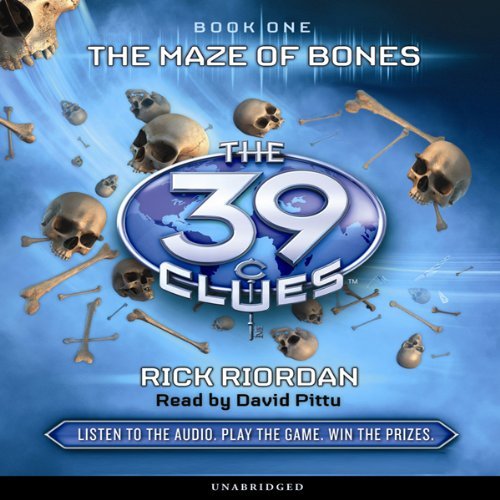
My son pulled out the book he was reading: “The Maze of Bones” by Rick Riordan. You  might know Mr. Riordan as the author of the Percy Jackson series. Much like the Percy Jackson series, The Maze of Bones is the first in a series of books where a kid or group of kids are thrown into a mysterious plot calling them to adventure. Standard Joseph Campbell stuff, but in a format that’s easily digestible by kids.

My son eats these up.

He told me all about the story, about the kids who are searching for 39 clues to get what he said was “a very important treasure.”

“Wouldn’t it be easier to just take the money and create your own adventure?” I asked.

“No, Dad. In THIS adventure, you might die!”

I sat back for a moment and tried to remember what it was like to be that age. This is Shaw Kid #4 (aka SK4). He’s only eight years old and, to him, the call to adventure in life is worth more than a Million Dollars. He doesn’t quite grasp the concept of that much money. To him, a million dollars might as well be a bajillion: an incomprehensible amount.

To my son, the call to adventure was worth more than all the money in the world. The fact that the risks might even include death only made it more exciting and, therefore, more worthwhile.

Shouldn’t it be that way for us? Sure, we have to pay the bills and take care of responsibilities. The adult world has to take these things into account. But it struck me how easily I’ve looked past good opportunities that came with some risk in favor of the easy solution, the path well-traveled.

We all have a call to adventure in our lives. We’re probably not being called to fight Greek Gods or search for Clues to unearth magical powers like in my son’s favorite novels, but we do have things we wish we could do … only if. Only if we had the time or less responsibility or if it were somehow less risky and easy to chase these adventurous options.

To chase all of them would be irresponsible. But to chase none of them is another form of death. It just takes longer.

The next time I see a call to adventure, I’m going to consider it. A million dollars would be nice, but the possibility of Real, True passion and meaning in whatever it is I’m doing is worth well more than that.

What do you think? What adventures are you considering?

The Picture – A Free Valentine’s Day Story from Jamie D. Greening

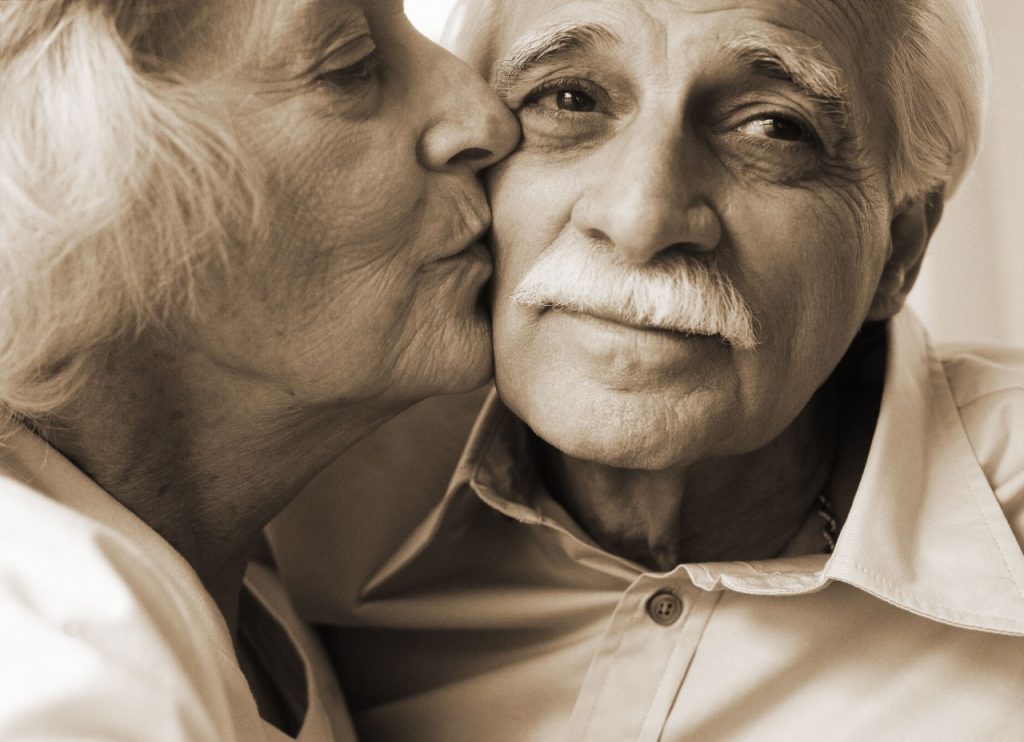
A picture holds a thousand words. But with today’s Free Valentine’s Day fiction, a picture might as well hold millions. Jamie Greening brings us another perspective on the paths love can take across a lifetime with his story: The Picture:

If you fell in love with this one, why not give some of the other authors a chance as well. Check out the sites for ALL of the Fondue Writers: Joseph CourtemancheJamie D. GreeningKathy KexelDerek Alan ElkinsRob Cely, and Dr. Paul Bennet. If you like what you see, why not pick up a few copies of their books? It covers the cost of everything, and it gives us hope in those long, dark nights when we’re dreaming up new stories, that Christmas miracles really do come true.

You might also consider our first collection of short stories, The Covid Quarantine Catina, written during the first months of the Covid-19 lockdowns. It’s available in Kindle, Paperback, and Audio formats.

Dr Paul Bennet will be back tomorrow with another Valentine’s Day short story. Until then, find someone you love, hug them tight, and remind them not to break anything.

Capital L

On Thanksgiving, our six year old son was nearly crushed by a 200lb, metal, lighted Santa Claus decoration. 

We went to the North Georgia mountains for the holiday to do some hiking and waterfall searching amongst the quiet of the pines, away from the hustle and bustle of destination resort town like our hometown of Orlando. 

It was great. At first. 

Then Santa slipped his tension wires just as our son was playing off-path in a park in Helen, GA. We told him repeatedly to come back, but he didn’t listen. The road less traveled was too tempting for him, and he paid the price. Let that be a lesson to all you would-be commencement speakers who quote Robert Grost. As a result, we spent Thanksgiving night in a remote Georgia ER, hoping for the bleeding to stop, and that our son had no brain abnormalities beyond those our genetics gifted him at birth.  

He was fine. No worries.  He DOES have a healthy distrust of Santa Claus now, though. Which is probably a good thing. 

In December, one of the stitches from my cornea transplant (from wayback in 2012) made its way loose. I had it removed, but apparently the place where said stitch used to be is now infected, which is a bad thing for transplants. The doctor says I’m 50/50 on whether I’ll lose the eye. 

“We’ll have to wait and see,” he said. Then, he added: “No pun intended.”

I’ve been here a few times over the years. Cornea transplants can reject easily, especially for those who are prone to rub their eyes with dirt-encrusted hands after wrestling with kids in the backyard. I’m hopeful things pull through. They always have up till now. It just means a few harrowing days of partial blindness and another doctor’s visit next Wednesday. Then, it’s either a few steroid drops and my eye becomes Arnold Schwarzenegger, or a I undergo surgery which will turn me into a white Nick Fury

Whatever happens, I’m living in the tension of waiting for things to return to normal, which is a tension I think we’re all familiar with lately. 

It would be easy to say that I can’t wait for Christmas break to end, for the kids to go back to school and me back to work. There IS a part of me that goes there, just like there’s a part of me that lamented being so far away from home when Santa assaulted my progeny. 

We yearn for normalcy, for predictability. But life isn’t normal. It rarely conforns to the best laid plans of mice and men.

When you focus on being normal, you miss capital-L life right in front of you. Like families laughing at each other when someone forgets to unmute themselves on the now-annual Holiday Zoom get-together. There is joy in the trenches and sadness in the peaks, because Life exists in both places. To focus on returning to Normal LIfe is to miss Life entirely. 

I’m spending the day after Christmas with the kids, watching Miyazaki films and eating popcorn (the same popcorn I got qs a gift from Captech as a gift for  Christmas. Thanks, CT!). Tomorrow, we’ll toss baseball in the backyard. On Wednesday, we’ll find out which path I take with my eyesight and go from there. Nothing I can do about it now, so there’s no point missing out on popcorn, movies, and baseball while we wait, right?

I feel good about this decision. 

An Other Christmas – Kathy Kexel

Aliens and Manger Scenes, Batman!

That’s the first thing that popped into my head when I ventured into today’s Fondue Writer’s Christmas story from Kathy Kexel. But that’s only because my brain is weird and operates in mysterious ways.

Today, Kathy Kexel blends Amish culture with science fiction with political intrigue and the Greatest Story Ever Told to come up with a wonderful tale of foreigners seeking refuge in unknown lands and finding a new place to call home.

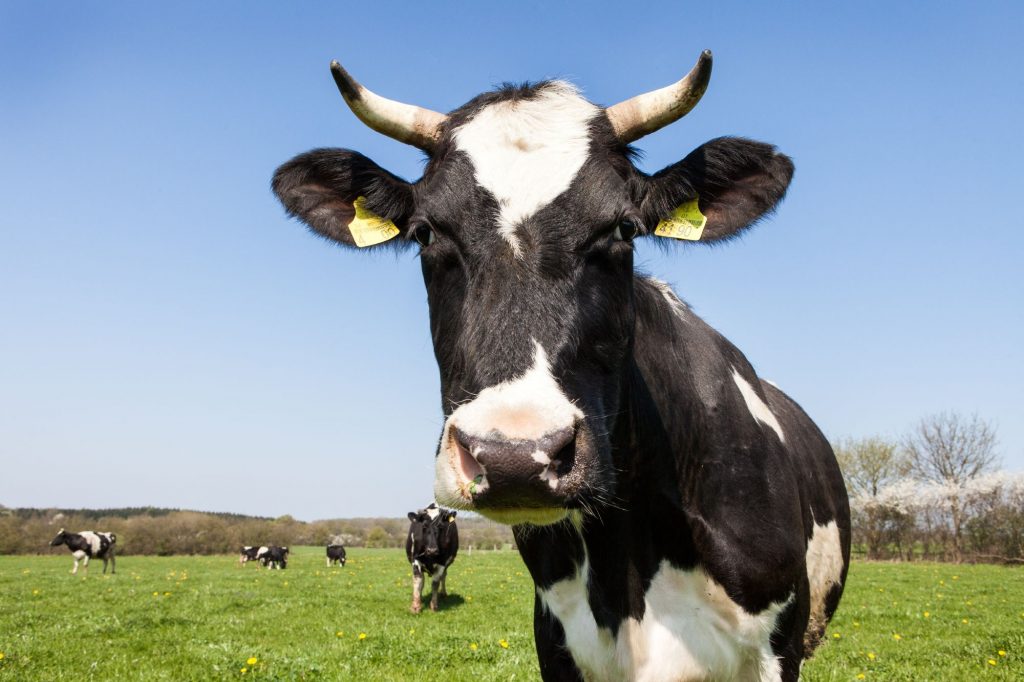
There are also cows.

Check out An Other Christmas by Kathy Kexel.

Germany, place unknown | 2011 04 | Dairy cow on the “Kattendorfer Hof”.

If you have the time, please check out the sites for ALL of the Fondue Writers: Joseph CourtemancheJamie D. GreeningKathy KexelDerek Alan ElkinsRob Cely, and Dr. Paul Bennet. If you like what you see, why not pick up a few copies of their books? It covers the cost of everything, and it gives us hope in those long, dark nights when we’re dreaming up new stories, that Christmas miracles really do come true.

If you’d like what you see, you might also check out our first collection of short stories, The Covid Quarantine Catina, written during the first months of the Covid-19 lockdowns. It’s available in Kindle, Paperback, and Audio formats.

Jamie D Greening will be back with us on Wednesday. Until then, be kind to your neighbors, celebrate the miracle of Christmas with those you love, and, as always … don’t break anything.