
The thing about cleaning out a garage is that it always begins with optimism. You tell yourself you’re just going to “straighten a few things.” Maybe sweep. Maybe unearth the screwdriver set that vanished sometime during the chaos of theast big hurricane. But then a single box appears, like the tip of an iceberg, and you know the day is about to go sideways.
Eliott, my oldest, now a teenager with the gentle indifference of a cat in human form, stood beside me, arms crossed. He had been drafted for this, as part of what I like to call “mandatory family bonding,” the kind that comes with sweat, dust, and my repeated insistence that “this won’t take long,” a phrase that has never once been true.
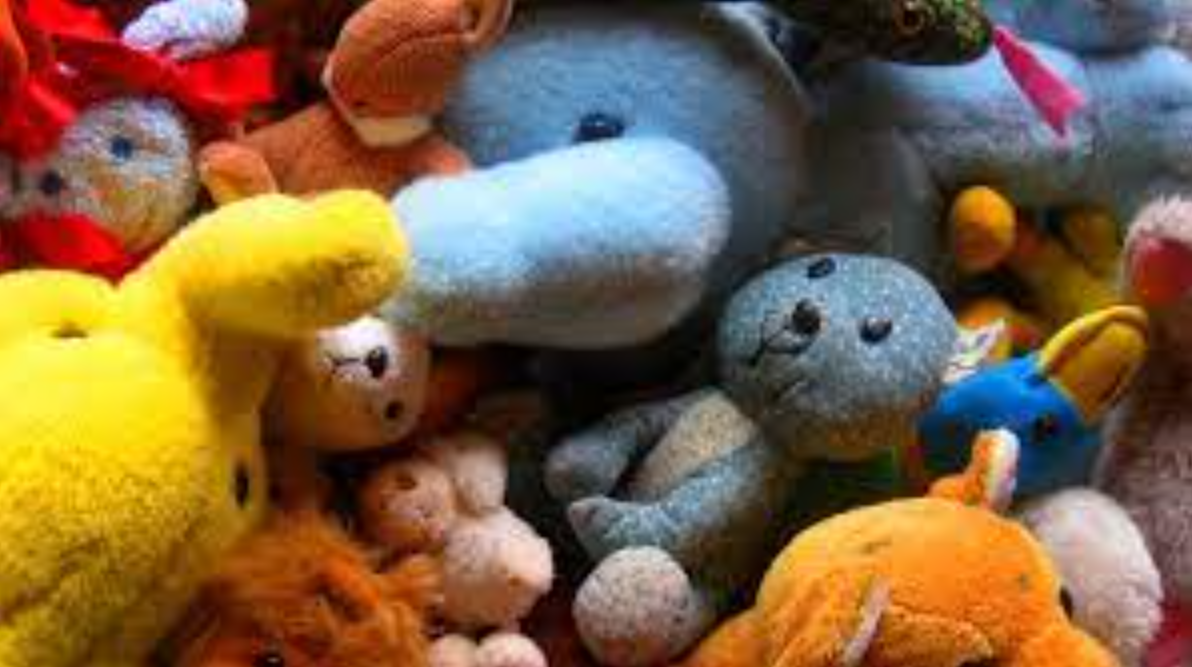
I lifted the lid of the first battered cardboard box and felt the shift immediately. There they were. Dozens of little faces staring back at me: the stuffed animals my kids once insisted we call “stuffies,” as if granting them a nickname might bring them one step closer to sentience. Bears with lopsided eyes, a penguin with a beak chewed down to a nub, a rabbit whose fur had gone gray with the accumulated grime of a hundred bedtime adventures.
Eliott glanced inside and shrugged. “Oh. Those. We can get rid of them.”
Just like that. We can get rid of them.
As if the box contained expired coupons or broken extension cords. As if these weren’t the same companions he and his siblings once refused to sleep without, the ones they tucked into seatbelts during car rides and introduced to visiting relatives like diplomats from a small but earnest nation.
I felt something catch in my throat, that parental hitch that means “Oh God, we’re here now.” This moment. It’s like stepping on a Lego in the dark: sudden, sharp, and unavoidably tied to your children growing up.
The thing is, there’s no clear boundary between the phases of family life. No bell rings to tell you that the era of tiny feet thundering across the kitchen has ended. No one informs you that the period of cartoon marathons and bedtime books read for the fiftieth time has quietly slipped away. Instead, you find out in moments like this, standing in a hot garage, holding a fraying bear whose name you once knew and have suddenly forgotten.
“What about this guy?” I asked, lifting a bright blue monster whose felt was worn smooth from years of being dragged everywhere like a living security blanket.
Eliott shrugged again. “Donate it?”
To him, it was clutter. To me, it was effectively a signed affidavit stating: Your children are teenagers now, and you cannot stop time with wistful nostalgia or even good organizational skills.
We loaded the boxes into the trunk, and I realized that this was it. The stuffies, small relics of a world that was loud and chaotic and sweet and absolutely exhausting, were going to Goodwill. Someone else’s toddler might sleep on the rabbit’s graying fur. Someone else’s little hands might clutch that battered penguin for dear life on the way into preschool. It is a strange comfort, imagining these things living new lives, even if the chapter they represent in mine is already closed.
Driving to the donation drop-off, I remembered all those nights when the kids fell asleep on my back during movie marathons, their warm little bodies draped across me like affectionate barnacles. I remembered stepping over a minefield of toys, hearing their tiny footsteps at 6 a.m., and watching the same animated film so many times that the characters began appearing in my dreams, silently demanding union representation.
And just like that, those years are gone. Not bad, not tragic, jusr finished. Replaced by a phase that is already wonderful in its own baffling, moody, adolescent way. A phase full of inside jokes, late-night talks, and kids who, in some cases, are now taller am I am. A phase that we entered gradually and without ceremony, which is probably for the best. I don’t think anyone could survive sharply drawn lines between childhood and whatever comes after.
But handing over the box at Goodwil, watching the volunteer lift it from my arms like it weighed nothing, like it wasn’t carrying entire years of my life, that was a line drawn for me.
When we got back in the car, Eliott looked out the window, bored and hungry.
“Can we get lunch?” he asked. His tone was matter-of-fact, nothing special. But it grounded me.
“Yes,” I said. “Yeah, let’s do that.”
Because even though the stuffies are gone, even though the little-kid era has officially been boxed, lifted, and donated, the next phase is already here, and this one, too, will be good.
And someday, I imagine, I’ll be cleaning out a different garage with a different version of Eliott. He will be taller, older, maybe with a beard, and I’ll come across something else that nudges another quiet door closed behind us. Another episode in the long series of letting go.
But for now? We have lunch. We have today. And I am trying, as best I can, to live in the phase I’m actually in.