
I’m working on building out some short stories for a collection I hope to publish next year. Here’s one of my previous stories, which has been updated. I hope you like it..
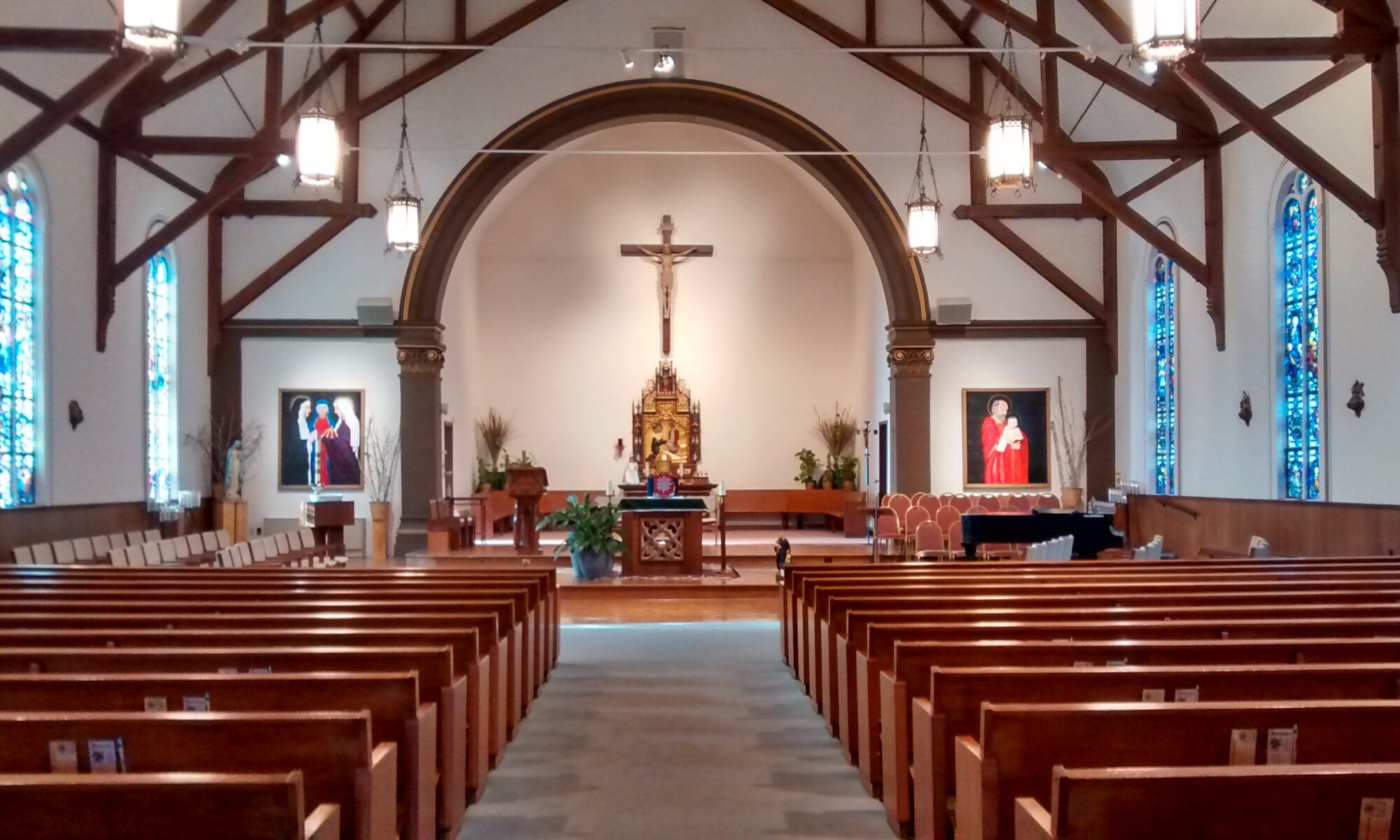
The candle Father Denneman had lit an hour earlier was beginning to drown in its own wax. Everything else in Our Lady of the Rosary had already gone under.
He sat alone in the confessional, door ajar, hand resting over the letter folded inside his pocket. Outside the latticework, the last of the November light slid through the stations of the cross – Veronica’s veil, the fall on the way to Calvary, the stripping of the garments – spilling bruised reds and blues across the empty pews. The colors moved the way water once moved in this place: slowly, beautifully, and always downward.
No one had come to confession in weeks. No one had come to much of anything in months. The old faithful still shuffled in on Sunday mornings, a stubborn dozen clutching their rosaries, but even their footsteps sounded apologetic now, as if they knew they were only keeping a corpse warm.
Father Denneman closed his eyes. In the dark behind the lids he could still hear the choir risers creaking open somewhere beyond the sanctuary; twenty small voices about to try, once again, to fill a room that had forgotten how to hold anything at all.
Then the back door of the church gave its familiar rheumatic groan. Footsteps. Hesitant. A single set.
A silhouette paused at the altar, struck a match, lit a candle. The new flame trembled, found its courage, and steadied. The silhouette turned toward the confessional.
“Um… hello?”
He drew a breath and spoke.
“Hello,” he said. “Come in.”
A pause. The kneeler creaked as she settled.
“Bless me, Father, for I have sinned?” She said it like a question, the sentence rising at both ends.
“Close enough. Usually, I’d ask how long it’s been, but…”
“Long enough that I’m sweating through my coat.”
A huff escaped him, almost a laugh.
“You know what I did this morning?”
“Tell me.”
“Came out here still half-asleep, barefoot, carrying a bowl of Wheaties. Stubbed my toe on the same damn pew I always stub it on. Dropped an f-bomb right then and there. Loudly.”
She laughed once, short and genuine.
“Nothing happened,” he went on. “No lightning. No thunderous voice. Just me, barefoot in God’s living room, swearing at the furniture. The carved walnut didn’t care. My toe didn’t know the difference between it and particle board.”
She laughed again, fuller this time.
“See?” he said. “The place looks holy, but it’s still just wood and wax and a couple of old men pretending we’ve got everything figured out.”
She relaxed a bit, settling in. The lattice between them seemed thinner now.
“So,” he said gently, “how long has it really been?”
“Thirty years, give or take a decade.”
He whistled low. “You win.”
Another small laugh from her side, softer, almost shy.
“Welcome back,” he said. “You’re safe here. Even from me.”
He heard the small, involuntary sound she made. Half sigh, half laugh. Then, the soft scrape and creak of the kneeler as she let her weight sink fully onto it for the first time. Her forehead came to rest against the lattice. He could see the faint blur of it through the screen, close enough that her breath stirred the dust on the wood.
“So what kept you away all these years?”
She was quiet long enough that he wondered if she’d changed her mind and slipped out.
“My father left,” she said finally. “Fourth grade. One Tuesday he was there for breakfast, by Friday he wasn’t. Mom dragged us to Mass for a while after that; like if we kept showing up, God would notice and send him back. Didn’t work.”
He let the silence sit.
“I’m sorry,” he said.
“Eventually Mom gave up too. Sundays turned into … nothing special. Sleep, laundry, cartoons if we were lucky.” A small, dry laugh. “Less cartoons than Saturdays, actually.”
He smiled at that, though she couldn’t see it. “I know a few families who measure grace in cartoon minutes.”
She shifted; the kneeler creaked. “Do you ever wonder why He lets that happen? A kid’s whole world cracks open and nobody upstairs seems to notice?”
The question hung between them like incense.
“I wonder every day,” he said quietly.
Another silence, softer this time.
“My mother had this line she used whenever the church ladies cornered her in the parking lot. They’d ask if she’d opened her heart to God’s voice. She’d say, ‘I opened it. The room was empty and the echo sounded hollow.’”
He exhaled through his nose. The laugh of recognition.
“I used to think she was just bitter,” the woman went on, voice lower. “Now I think maybe she was just being honest.”
“And you?” he asked, careful, testing the thin ice. “When you open the door, what do you hear?”
Nothing for a long moment.
“Mostly static.”
He nodded to himself. “Some days that’s all I get too.”
She turned her head. He caught the faint movement through the screen. “You’re not supposed to say that.”
“Probably not.”
A longer pause. He could hear her breathing, deliberate. She was deciding whether to jump.
“I don’t think He hates us,” she said at last. “I just don’t think … I don’t know if He’s home. All those prayers bouncing off the ceiling. What’s the point?”
He opened his mouth, the old reflex rising.
“Well, trust me,” he started, “God believes—”
“In me?” The words cracked out, sharp and wounded. “That’s what you were going to say, right?”
He stopped. Caught. The words left a bad taste on his tongue the moment he spoke them.
“Because that fixes everything,” she pressed, already gathering her purse, the strap scraping wood. “A bumper sticker and a fish fry and we all skip home happy.”
The kneeler groaned as she stood.
“I’m sorry, Father. This was stupid.”
He heard her hand on the door.
“You’re right,” he said, loud enough to halt her, soft enough that it didn’t sound like an order. The door stayed half open.
“You’re right,” he repeated, barely above a whisper. “That was a cheap thing to say. I’m sorry. Can you forgive me?”
Another long beat. He could almost feel the cold November air sneaking in through the gap. Then the door eased shut again. The kneeler sighed as she sat.
“Yes,” she said, so quietly he almost missed it.
“Thank you,” he answered, and meant it more than he had in years.
From somewhere beyond the sanctuary came the metallic yawn of folding risers, the bright chaos of children spilling into the choir loft: folders flapping, sneakers squeaking, a dozen small voices overlapping.
“Okay, okay, settle!” the choir director called. “Warm-ups in thirty seconds.”
Father Denneman wiped the corner of his eye. “I’m sorry again,” he said, quieter now. “Old reflexes. Cheap answers.”
The woman gave a small, forgiving hum. “If priests start confessing to the penitents, I really have been gone too long.”
“Wait till you hear about the nuns’ Friday-night disco in the convent basement.”
That did it. They both cracked; real, helpless laughter that rolled out of the confessional and bounced off the vaulted ceiling. A few high, curious soprano voices in the loft faltered mid-scale and went silent, trying to locate the source of the unholy noise.
When it finally ebbed, the only sound was their breathing and, faintly, the director clapping for attention. Father Denneman spoke first, voice soft, almost wondering.
“I can’t remember the last time I laughed like that.”
“Me neither,” she whispered.
The silence that followed was different, thicker, careful.
He leaned toward the screen. “Has something taken your laughter away, too?”
She didn’t answer right away.
“My son,” she said again, as if testing the words to see if they still fit in her mouth.
“Kids can be difficult,” he offered.
“Not him. Not at first.” Her voice cracked on the memory, then steadied. “He came out smiling. Literally smiling. Grandma swore the delivery-room nurse dropped him because she was laughing so hard at that face.”
Father Denneman gave another soft huff. Permission to keep going.
“He was … light,” she said. “Third grade, he won the class spelling bee. Got invited to the all-school one, third through eighth. I told him not to get his hopes up, those big kids would eat him alive. He just grinned and studied like it was the Olympics.”
She stopped, swallowed.
“Made it to the final three. Him and two eighth-graders built like linebackers. They ran out of words. Threw some monster at him. Pulchritudinous.”
He snorted. “Come again?”
“Exactly. Means beautiful, apparently. He missed it by one letter. Took third. The eighth-graders high-fived him like he was their little brother.” Her fingers worried the edge of the kneeler. “That was him. Smiling his way over every wall.”
The silence stretched, careful.
“Until middle school?” he asked, quietly.
A nod he felt more than saw.
“He needed people the way flowers need sun. But something shifted inside him around then. Quietly, steadily. He spent more and more time alone in his room, earbuds in, scrolling through worlds that weren’t his. The light in him just… dimmed. Quit eating much. Quit talking except when he had to.
She drew a breath.
“We tried everything. Soccer, art club, therapy waiting lists a mile long. Nothing reached him.”
Another breath, ragged now.
“Last May I came home early. Bought his favorite ice cream. Mint chocolate chip. Thought maybe a walk by the lake.” Her voice frayed to nothing.
He waited. The choir was doing scales somewhere far away, innocent and cruel.
“I called his name. The house was too quiet. Went to his room.”
The next words came out scraped, raw.
“He’d used a belt. In the closet. Like he didn’t want me to find him too soon.”
Father Denneman closed his eyes.
“I’m sorry,” he said, and this time it wasn’t the priestly reflex. He was just a man running out of useful words.
She let out a sound that might have been a laugh once, long ago.
“Everyone’s sorry. Then they laugh about football ten minutes later and you want to scream.”
“I know,” he said. “My mother. Two years ago. Red-light runner. Broadsided her. She died in an instant. At the wake, people were telling jokes over the veggie tray and I thought I’d be sick on the carpet.”
“Yes,” she whispered. “Exactly that.”
“Sometimes,” he said, voice low, “you have to hide just to feel it all the way to the bottom. Otherwise the noise keeps you numb.”
“I’m still at the bottom, I think.”
He rested his forehead against the cool wood of the screen. “Me too, some days.”
She pressed her palms to her eyes like she could push the tears back in.
“I kept it together,” she said, voice cracking. “Funeral, casseroles, the stupid questions. Back to work like nothing happened. Like I could just move on. Butwith the Holidays coming… I can’t. I just can’t.”
“It’s all right if you fall apart,” he started.
“No.” The word cracked like a slap. “It’s not all right. It’s my fault.”
“No…”
“I knew.” She stood so fast the kneeler clattered. “I’m his mother. I saw him disappearing and I told myself stories. ‘He’ll snap out of it when school opens. When he sees his friends.’ Lies. All lies.”
Her hand found the door.
“I did nothing,” she whispered. “There’s no forgiveness for that.”
The door opened. Cold air rushed in. She stepped out, shoulders shaking with silent sobs. Father Denneman followed without thinking. The aisle felt a mile wide.
She was halfway to the vestibule when his voice stopped her.
“Me too.”
She turned, eyes red.
“You think you’re a monster?” he said. “Join the club.”
He pulled the envelope from his pocket, creased and soft from being carried too long.
“My father wrote this. He died five weeks ago. I haven’t spoken to him in twenty years.”
She took one hesitant step back toward him.
“He came to me for confession,” he went on, voice raw. “Told me he was leaving my mother for another woman. I lost it, screamed at him in the confessional like a lunatic. Threw him out. Cut him off. Phones, letters, visits. I ignored everything.”
He laughed once, a dry, hurting sound.
“When he got sick – lung cancer, no surprise, he always smoked like a chimney — he asked for me. I was too proud. Too angry. I stayed away. Didn’t even go to the funeral.”
He unfolded the letter with unsteady fingers.
“I got this after he was gone.”
He didn’t read it aloud; he couldn’t. Instead he held it out. She took it, eyes scanning quickly.
…never stopped loving you…
…I understand your silence…
…God has forgiven me…
…hope you can one day…
She looked up. Tears on both their faces now.
“I’m the monster who wouldn’t forgive,” he said. “And now it’s too late.”
From the loft, unaccompanied young voices began the Ave Maria: thin, clear, almost fragile. She folded the letter, handed it back. Their eyes met, no screen between them this time. Two people standing in the colored dust of dying light, carrying the same unbearable weight.
He looked at her, eyes still wet. “I don’t think you’re a monster. And if you are…” His voice cracked. “Then I’m worse.”
She stepped closer, close enough that the colored light from the windows painted both their faces, and rested her hand lightly on his shoulder.
“Listen,” she whispered, tilting her head toward the loft. A new piece had started, something simpler, the children finding their courage again. “They’re beautiful.”
A small, broken laugh escaped him. “Wait till you hear them when they’re not nervous.”
The laugh caught in her throat too, turned into something softer, almost like relief.
“You’re not a monster,” he said quietly.
She let her hand fall, then gave the smallest nod. “Neither are you.”
The choir swelled into the final phrase, young voices rising together, carrying every unsaid thing up into the darkening rafters. They stayed where they were and listened as the children sang.