Stuffies

The thing about cleaning out a garage is that it always begins with optimism. You tell yourself you’re just going to “straighten a few things.” Maybe sweep. Maybe unearth the screwdriver set that vanished sometime during the chaos of theast big hurricane. But then a single box appears, like the tip of an iceberg, and you know the day is about to go sideways.

Eliott, my oldest, now a teenager with the gentle indifference of a cat in human form, stood beside me, arms crossed. He had been drafted for this, as part of what I like to call “mandatory family bonding,” the kind that comes with sweat, dust, and my repeated insistence that “this won’t take long,” a phrase that has never once been true.

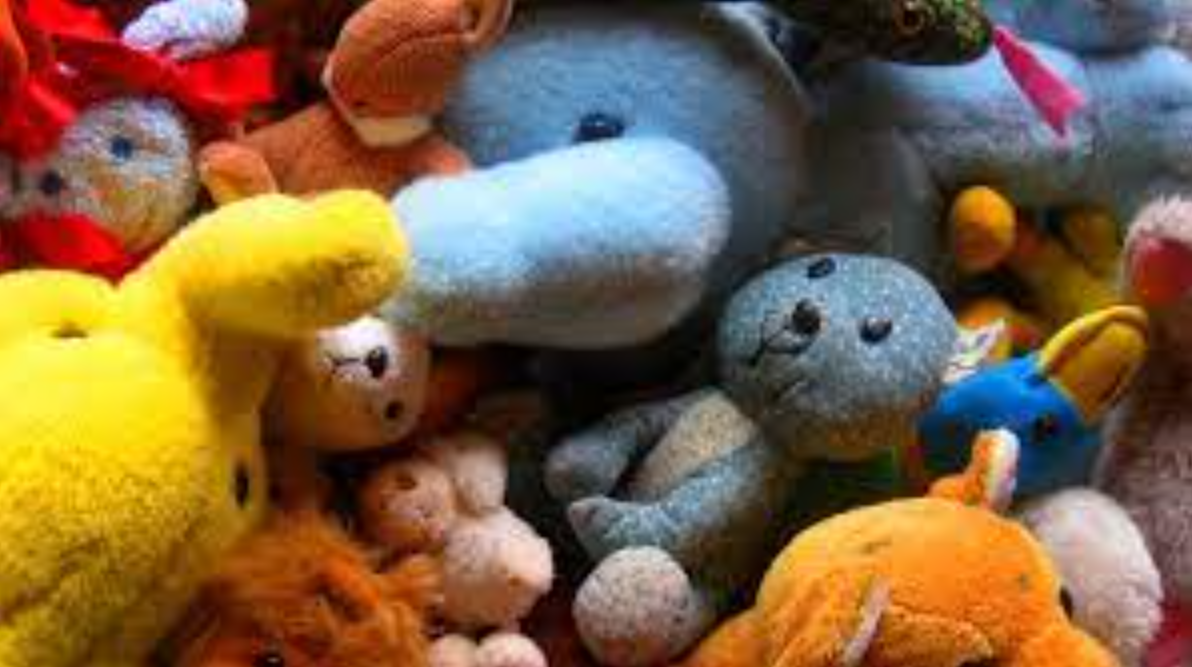
I lifted the lid of the first battered cardboard box and felt the shift immediately. There they were. Dozens of little faces staring back at me: the stuffed animals my kids once insisted we call “stuffies,” as if granting them a nickname might bring them one step closer to sentience. Bears with lopsided eyes, a penguin with a beak chewed down to a nub, a rabbit whose fur had gone gray with the accumulated grime of a hundred bedtime adventures.

Eliott glanced inside and shrugged. “Oh. Those. We can get rid of them.”

Just like that. We can get rid of them.

As if the box contained expired coupons or broken extension cords. As if these weren’t the same companions he and his siblings once refused to sleep without, the ones they tucked into seatbelts during car rides and introduced to visiting relatives like diplomats from a small but earnest nation.

I felt something catch in my throat, that parental hitch that means “Oh God, we’re here now.” This moment. It’s like stepping on a Lego in the dark: sudden, sharp, and unavoidably tied to your children growing up.

The thing is, there’s no clear boundary between the phases of family life. No bell rings to tell you that the era of tiny feet thundering across the kitchen has ended. No one informs you that the period of cartoon marathons and bedtime books read for the fiftieth time has quietly slipped away. Instead, you find out in moments like this, standing in a hot garage, holding a fraying bear whose name you once knew and have suddenly forgotten.

“What about this guy?” I asked, lifting a bright blue monster whose felt was worn smooth from years of being dragged everywhere like a living security blanket.

Eliott shrugged again. “Donate it?”

To him, it was clutter. To me, it was effectively a signed affidavit stating: Your children are teenagers now, and you cannot stop time with wistful nostalgia or even good organizational skills.

We loaded the boxes into the trunk, and I realized that this was it. The stuffies, small relics of a world that was loud and chaotic and sweet and absolutely exhausting, were going to Goodwill. Someone else’s toddler might sleep on the rabbit’s graying fur. Someone else’s little hands might clutch that battered penguin for dear life on the way into preschool. It is a strange comfort, imagining these things living new lives, even if the chapter they represent in mine is already closed.

Driving to the donation drop-off, I remembered all those nights when the kids fell asleep on my back during movie marathons, their warm little bodies draped across me like affectionate barnacles. I remembered stepping over a minefield of toys, hearing their tiny footsteps at 6 a.m., and watching the same animated film so many times that the characters began appearing in my dreams, silently demanding union representation.

And just like that, those years are gone. Not bad, not tragic, jusr finished. Replaced by a phase that is already wonderful in its own baffling, moody, adolescent way. A phase full of inside jokes, late-night talks, and kids who, in some cases, are now taller am I am. A phase that we entered gradually and without ceremony, which is probably for the best. I don’t think anyone could survive sharply drawn lines between childhood and whatever comes after.

But handing over the box at Goodwil, watching the volunteer lift it from my arms like it weighed nothing, like it wasn’t carrying entire years of my life, that was a line drawn for me.

When we got back in the car, Eliott looked out the window, bored and hungry. 

“Can we get lunch?” he asked. His tone was matter-of-fact, nothing special. But it grounded me.

“Yes,” I said. “Yeah, let’s do that.”

Because even though the stuffies are gone, even though the little-kid era has officially been boxed, lifted, and donated, the next phase is already here, and this one, too, will be good.

And someday, I imagine, I’ll be cleaning out a different garage with a different version of Eliott. He will be taller, older, maybe with a beard, and I’ll come across something else that nudges another quiet door closed behind us. Another episode in the long series of letting go. 

But for now? We have lunch. We have today. And I am trying, as best I can, to live in the phase I’m actually in.

Big Pile of Nothing

There’s a particular kind of email that arrives at 3:12 a.m., when I’m asleep and at my most vulnerable. It’s from my bank, which insists on addressing me like a Victorian suitor: “Mr Shaw, we have important news about your credit score.”

I imagine the bank leaning over my bedside, shaking me awake.

“MR SHAW … MR SHAW … something’s happened.”

Bleary-eyed, I brace myself. Identity theft? Fraud? A long-lost inheritance?

No. My credit score is up three points. Three whole points. A shift so minuscule it could be caused by nothing more than the gravitational pull of a passing pigeon.

And yet they send a message every single day, as if my credit score is a fragile preemie they’re keeping alive in an incubator. God forbid you buy a car. Then the messages multiply like fruit flies. “New activity detected!” they warn, as if you didn’t know that you were the one who bought a Honda CR-V and not a cartel laundering money through a dealership in Akron. It’s a whole industry built on telling you things you already know. Except louder.

Then there are the Employee Assistance Programs. Every company claims to have one, printed in a cheerful PDF with stock photos of improbably diverse people smiling at clipboards. They’re always “robust,” “comprehensive,” and “here for you,” by which they mean: Three complimentary counseling sessions … every other year … with a social work intern only available on Tuesdays … between 2:00 and 2:30 a.m.

It’s the corporate version of a parent saying, “We support your dreams,” while handing you $7.53 and a bus schedule from 1998.

I once tried to schedule one of these sessions, and I swear the process had the same energy as trying to book a tee time at Augusta National. “We’re sorry, the calendar is full until the next fiscal quarter,” the intern told me, chewing what sounded like homework. “But we do have an opening on Leap Day at half past midnight, provided Mercury isn’t in retrograde.”

I hung up thinking: This is not an assistance program. This is a scavenger hunt. But they get to brag about it at the All-Hands meeting like they’ve personally cured loneliness.

Fast-food restaurants do the same thing with their charity programs. You’re standing there, just trying to buy a taco — one taco, a humble thing — when the cashier, who hasn’t blinked since you walked in, asks, “Would you like to round up your order to support our children’s literacy foundation?”

Ah yes, the foundation. The one whose website shows glossy photos of happy children reading books, while the annual financial report shows that 95% of donations went to “administrative overhead,” which is corporate code for someone leased a boat.

Really, the restaurant is getting a tax write-off on money I supplied, which I believe is the economic equivalent of being pickpocketed and commended for my generosity. But they beam about it. They act like they invented charity. Meanwhile, somewhere, an actual child is squinting at a book printed in 1973. 

Everywhere you go, companies are trying to convince you they’re changing the world, that your life is measurably better because they exist. They post on LinkedIn about “empowerment” and “transformation” and “our mission to elevate the human experience,” while providing benefits that could barely elevate a houseplant.

Bright packaging around an empty box. Movement without meaning. A big pile of nothing.

And I can’t help thinking: where are the companies actually doing good? The ones who fix things instead of diagnosing them? The ones who don’t brag about their kindness like it’s a new product launch? The ones who don’t need twelve cents from my taco to become decent?

Because I’d give those companies all my extra taco bucks. Even the nickels. Hell, I’d even let them email me at 3:12 a.m. As long as it meant something.

Ballfields At Sunset

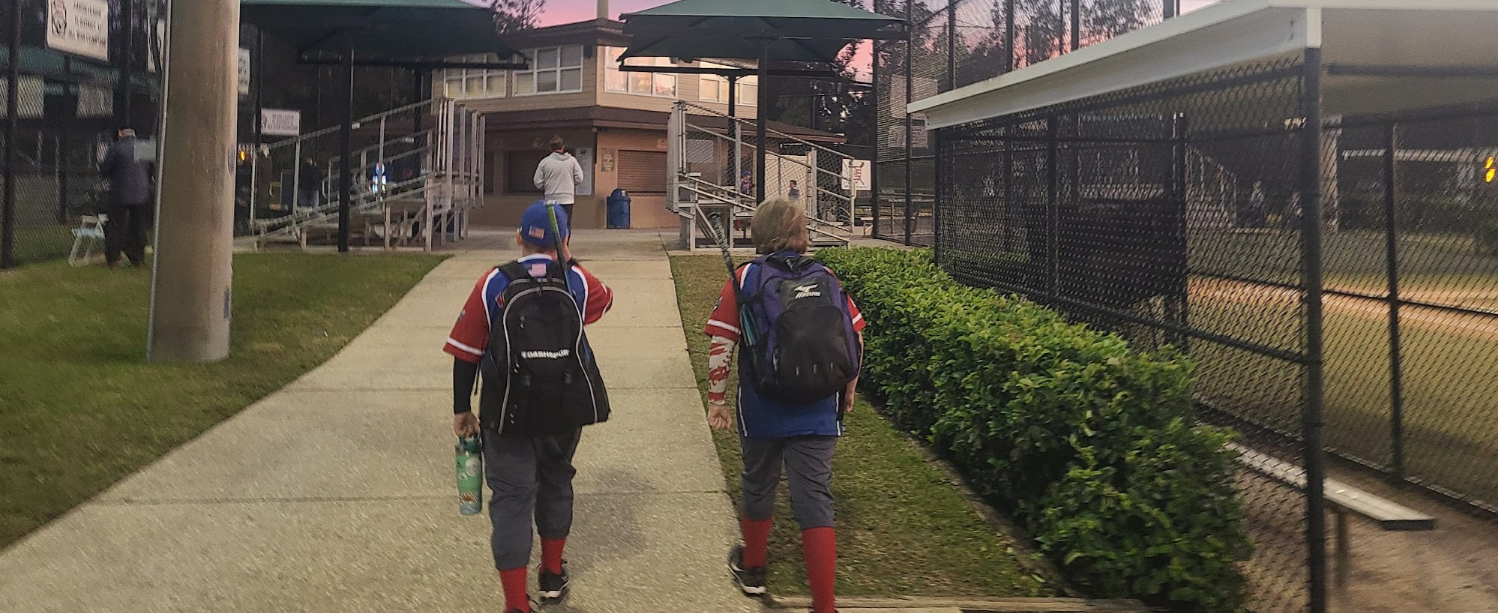
There’s a kind of magic that happens at a little league field just before sunset. Tthe kind that doesn’t need special effects or soundtracks, just the hum of families unpacking chairs and the sound of kids laughing like they haven’t yet learned what disappointment feels like. The lights flicker on, one by one, flooding the field in a glow that somehow makes even the chain-link fence look cinematic. It’s twenty minutes before the Bisons play their last regular-season game against their rivals, The Sea Dogs. For once, everyone’s early.

Work is still chaos. Somewhere, a database is waiting for me to make sense of it, and a dozen emails are conspiring to ruin tomorrow morning. But right now, none of that matters. I’m sitting in a collapsible chair that probably wasn’t meant for anyone over five-foot-ten, next to a wagon full of snacks and hoodies, watching Breccan and his friends stretch and joke in the outfield. They’re trying to look serious, but they can’t stop smiling. They’re kids on the edge of something that feels big to them, and in this moment, big to me, too.

The air has cooled just enough that the evening feels like a gift. Parents chat about holiday plans, and someone’s grandmother hands out candy from a Ziploc bag like it’s communion. The smell of concession-stand burgers drifts over the field, and someone’s Bluetooth speaker softly plays “Sweet Caroline,” because apparently, there’s a law that it must.

I catch myself thinking how easy it is to miss this: these small, ordinary moments that end up meaning everything. Between deadlines and dinners, bills and bedtime routines, we move so fast that life becomes a series of checkboxes. 

But sitting here, watching the field glow against the darkening sky, I realize this is it. This is the point. Not the promotions or the projects or even the perfect Christmas lights I’ll inevitably tangle myself in later. It’s this, leaning into the little moments, the ones that won’t happen again quite like this.

When the umpire calls, “Play ball,” and the crowd cheers, I feel that rare and quiet satisfaction of being exactly where I’m supposed to be. For now, the world can wait. Tonight, it’s just the Bisons, the field, and the people I love most, breathing in the good kind of chaos.